
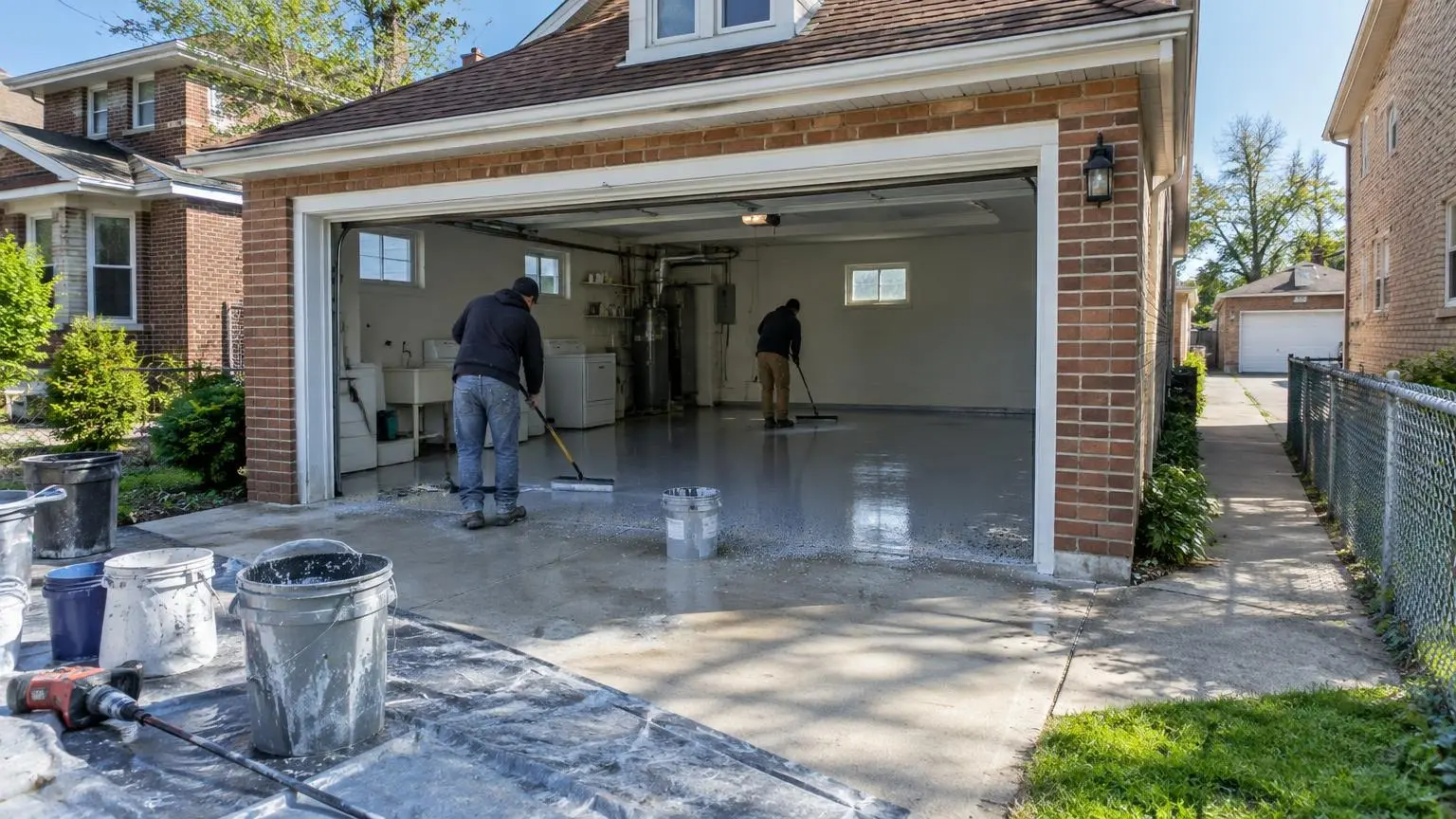
Vinyl flake floors for garages, basements and utility rooms
Epoxy Chip Floors in Chicago, IL
A speckled, textured finish that grips wet boots and keeps salt rings out of sight.
- Free estimate at your property, including a moisture reading on the slab
- A written quote that lists every coat and prep step
- Surface prep explained before we grind a single square foot
Why Chip Floors Suit Chicago Winters
Epoxy chip floors are the system Chicago homeowners ask about most, and for good reason. A chip floor, also called a flake epoxy floor or vinyl flake floor, starts with a resin base coat. While it is still wet, we broadcast thin colored vinyl chips over it, scrape off the loose ones once it cures, and lock everything under a clear topcoat. What you end up with is a speckled surface with a slight texture that hides dirt, dried salt and tire marks far better than a solid color does.
Full or partial chip coverage
A full broadcast means chips go down until the base coat cannot hold another one, leaving the floor covered edge to edge. You get maximum texture, maximum hiding and a thicker overall build, which is why we suggest it for most garages that take winter driving. A partial broadcast scatters a lighter layer of chips over a solid base color that stays visible. The look is cleaner and more modern, it suits a basement rec room or laundry area, and it shows a bit more dirt.
Traction on a wet floor
With meltwater on it, a smooth, glossy coating can get slippery. Chips bring texture by themselves, and fine grit blended into the topcoat adds more. That makes a difference in a garage where snow melts off the car and in a basement where summer humidity can leave a film of condensation on cool concrete. Wikipedia lists the average July dew point at O'Hare at 61.7 F, which is muggy enough to make a sealed floor feel damp on some days. We carry texture samples you can test by hand.
Choosing a blend
Chip blends range from light gray and white mixes to tan, earth tones and dark charcoal with color flecks. For a garage that sees salt, we usually steer people toward a mid-tone gray or tan blend, because white salt residue disappears into it. Very dark blends look sharp but show salt rings, and pale ones reveal tire marks. If your home has brick, limestone or a particular cabinet color in the garage, bring it up and we can match to it.
What goes under the chips
The chips get the attention, but the base coat and prep do the work. We diamond grind the slab, fill cracks and pits, and test moisture before mixing anything. On an older Chicago slab with layers of paint, the grinding can take longer than the coating. The base coat goes on thick enough to hold a full chip load, and the clear topcoat is chosen for what the floor faces: polyaspartic for UV and fast return to service, or a urethane where chemical resistance matters most.
Where chip floors fit
Garages are the obvious fit. Chip floors also work well in mudrooms off the garage, basement laundry and storage areas, workshops and small commercial back rooms. In a two-flat or three-flat with a shared basement, a chip floor is forgiving of the scuffs and dirt that come with several households using the same space.
Caring for a chip floor
Sweep or dust mop as needed, and rinse the floor during winter to keep salt from drying on it. A pH-neutral cleaner is enough for most messes. Avoid dragging metal stands or sharp equipment across the floor, and use a pad under motorcycle and jack stands. With that care, a well-bonded chip floor stays easy to keep clean for a long time.
Chip floors and older slabs
Chip floors are forgiving, which makes them a good match for older concrete. The broadcast layer hides small trowel marks, light staining and patched areas that would show through a solid color. That does not mean we skip repairs. Cracks still get filled and ground flush, and spalled areas near the door still get rebuilt, because a chip floor laid over loose concrete will crack along with it. But on a slab that is sound and a bit rough looking, chips give you a finished look without the cost of resurfacing the whole floor.
Flake versus quartz or solid color
People sometimes ask how a vinyl flake floor compares with a quartz broadcast or a solid pigmented coat. Quartz gives more grit and is common in commercial kitchens, but it feels rougher underfoot and is harder to sweep in a home garage. Solid colors are clean and modern but show dust, salt and tire marks quickly. For most homes, flake strikes the middle ground: textured enough to grip, smooth enough to clean and busy enough to hide the daily mess. We bring all three to the estimate if you want to compare them side by side.
Planning around the seasons
Chip floors are installed in garages all year, but cold slabs slow curing. In an unheated detached garage we usually schedule chip floors for spring through fall, and in a heated attached garage we can work through much of the winter. We will give you a realistic window when we quote.
Chip Floor Options
Every flake epoxy floor includes prep, a base coat, the chip broadcast and a clear topcoat.
Full-broadcast chips
Chips to full coverage for the most texture and the strongest dirt and salt hiding.
Partial-broadcast chips
Chips scattered lightly over a solid color, a common pick for basements and finished rooms.
Chip size choices
Smaller chips give a fine, granite-like look; larger chips read as bold speckles.
Color blends
Grays, tans, earth tones and charcoal mixes, matched to your home.
Grit additive
Fine grit in the topcoat for extra traction on wet floors.
Clear topcoat
Polyaspartic or urethane, picked for UV, chemicals and cure time.
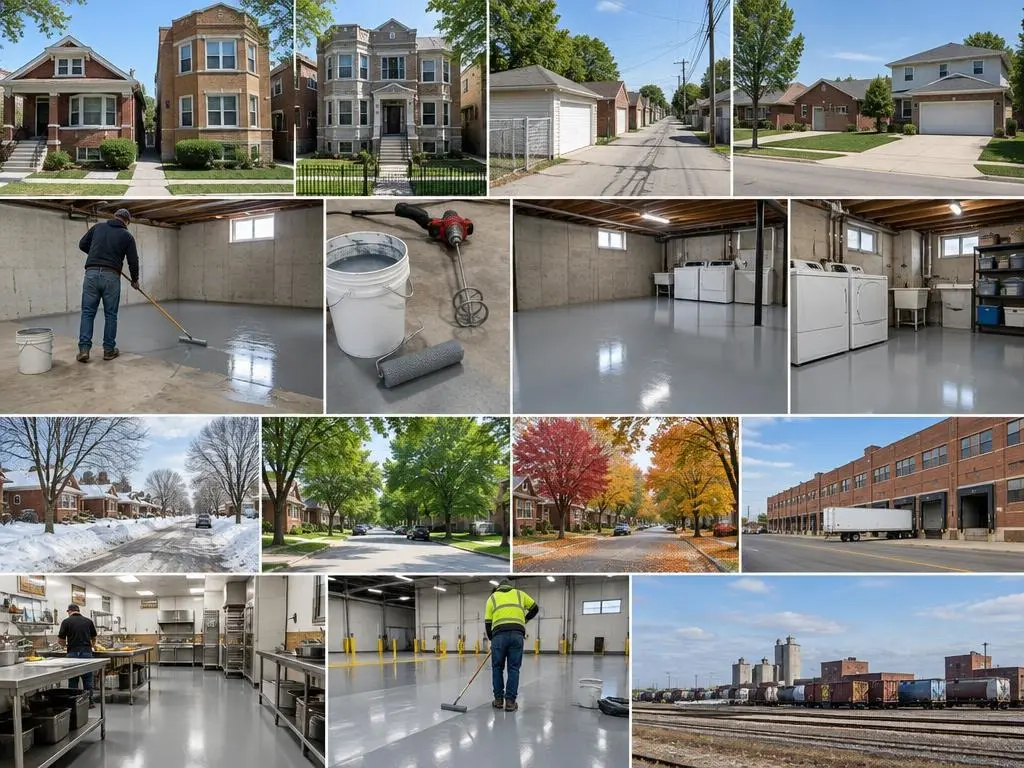
Chip Floor Price Ranges
| What is priced | National range | Source |
|---|---|---|
| Installed epoxy, per square foot | $4 to $10 | HomeGuide |
| Installed polyaspartic, per square foot | $5 to $12 | HomeGuide |
| Two-car garage, epoxy | $1,600 to $5,800 | HomeGuide |
| Two-car garage, polyaspartic | $2,000 to $6,900 | HomeGuide |
| Decorative flakes, material only | About $0.04 per sq ft | HomeAdvisor |
| High-grade coating upgrade | Adds 20% to 30% | HomeAdvisor |
| Typical contractor minimum | $500 to $1,000 | HomeAdvisor |
National survey figures only. Your chip blend, topcoat and the amount of prep the slab needs set the real number, and we put it on a written estimate that is the price you pay.
How a Chip Floor Goes In
1. Samples and testing
We bring chip samples, test the slab for moisture and measure.
2. Grind and fill
We diamond grind the slab and fill each crack and pit.
3. Base coat and chips
The base is rolled out and chips are thrown into it before it sets.
4. Knock down and clear coat
Once the base hardens, stray chips are knocked down and vacuumed, and the clear coat follows.
5. Walkthrough
We go over cure times and winter care before we leave.
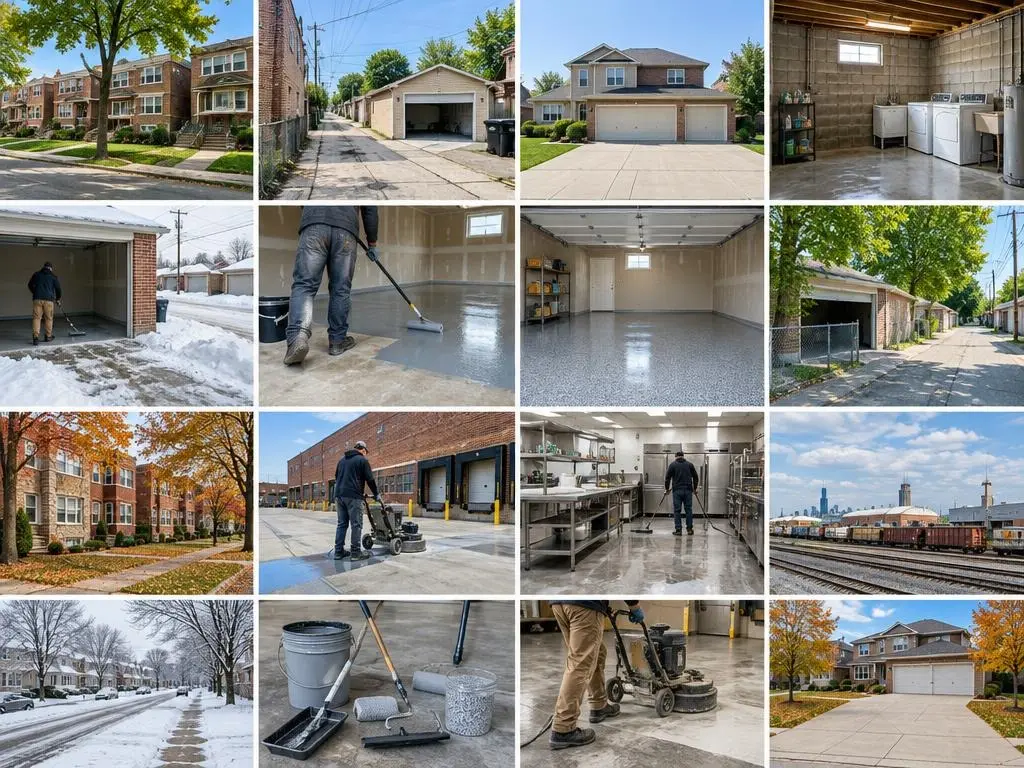
Why Choose Us for Epoxy Chip Floors
Blends picked for salt
We recommend tones that hide white salt residue and tire marks.
Texture you can test
Grit and chip samples at the estimate so you choose the grip level.
Thick base coats
The base goes on heavy enough to hold a full chip broadcast.
Epoxy Chip Floors Questions
Are epoxy chip floors slippery?
Full-broadcast chip floors have natural texture, and adding grit to the topcoat increases grip. They are much less slippery than a smooth, solid-color coating when wet.
Is a chip floor better than solid epoxy for a garage?
For most Chicago garages, yes. The chips hide salt, dust and small slab flaws, and the texture helps with meltwater. Solid colors look sleek but show every footprint.
What color chips hide salt well?
Mid-tone grays and tans hide dried salt most easily. Very dark blends show white residue, and pale blends reveal tire marks.
Can chip floors go in a basement?
Yes, provided the slab clears moisture testing. Many people choose a partial broadcast in finished basements and a full broadcast in laundry and storage areas.
How long does a chip floor take to install?
For most garages, the work itself runs one to two days, with prep and the chosen system setting the pace. How long you wait to park depends on the topcoat, and we give you exact times.
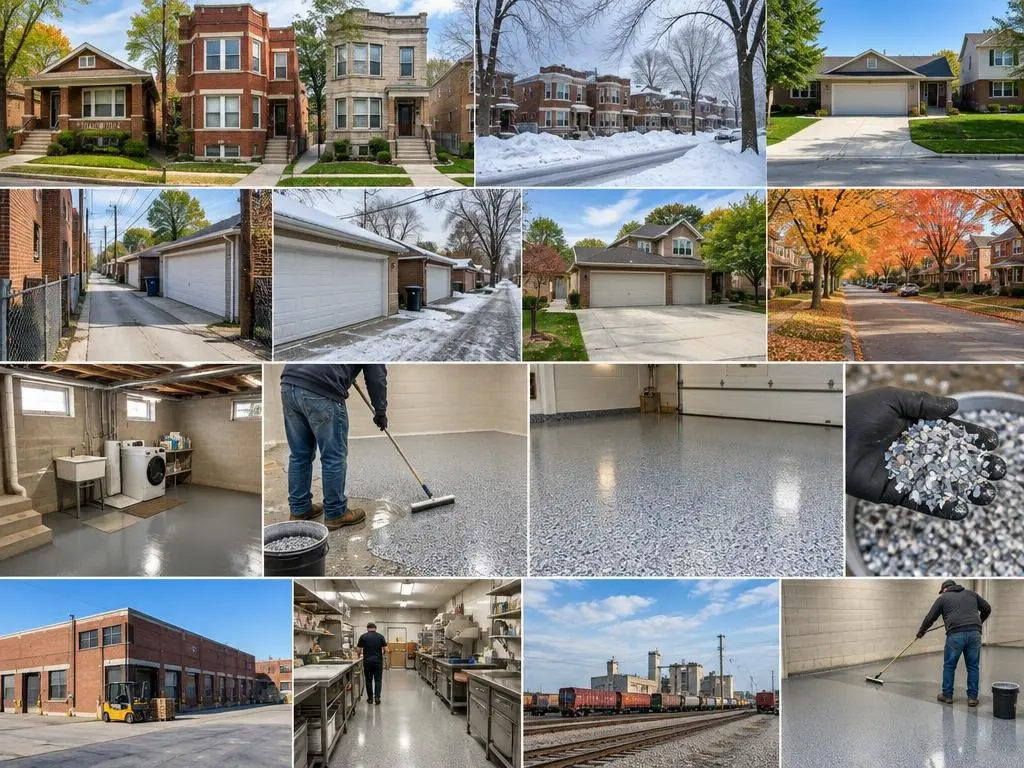
Epoxy Chip Floors Service Areas
- Epoxy Flooring in Chicago, IL
- Epoxy Flooring in Evanston, IL
- Epoxy Flooring in Skokie, IL
- Epoxy Flooring in Oak Park, IL
- Epoxy Flooring in Berwyn, IL
- Epoxy Flooring in Cicero, IL
- Epoxy Flooring in Oak Lawn, IL
- Epoxy Flooring in Orland Park, IL
- Epoxy Flooring in Tinley Park, IL
- Epoxy Flooring in Naperville, IL
- Epoxy Flooring in Downers Grove, IL
- Epoxy Flooring in Elmhurst, IL
- Epoxy Flooring in Hinsdale, IL
- Epoxy Flooring in La Grange, IL
- Epoxy Flooring in Western Springs, IL
- Epoxy Flooring in Lombard, IL
- Epoxy Flooring in Wheaton, IL
- Epoxy Flooring in Bolingbrook, IL
- Epoxy Flooring in Joliet, IL
- Epoxy Flooring in Palos Heights, IL
- Epoxy Flooring in Evergreen Park, IL
- Epoxy Flooring in Wilmette, IL
- Epoxy Flooring in Winnetka, IL
- Epoxy Flooring in Lincolnwood, IL
Get an Epoxy Chip Floors Estimate
Free estimates for flake floors in Chicago and nearby suburbs, with chip samples brought along.