
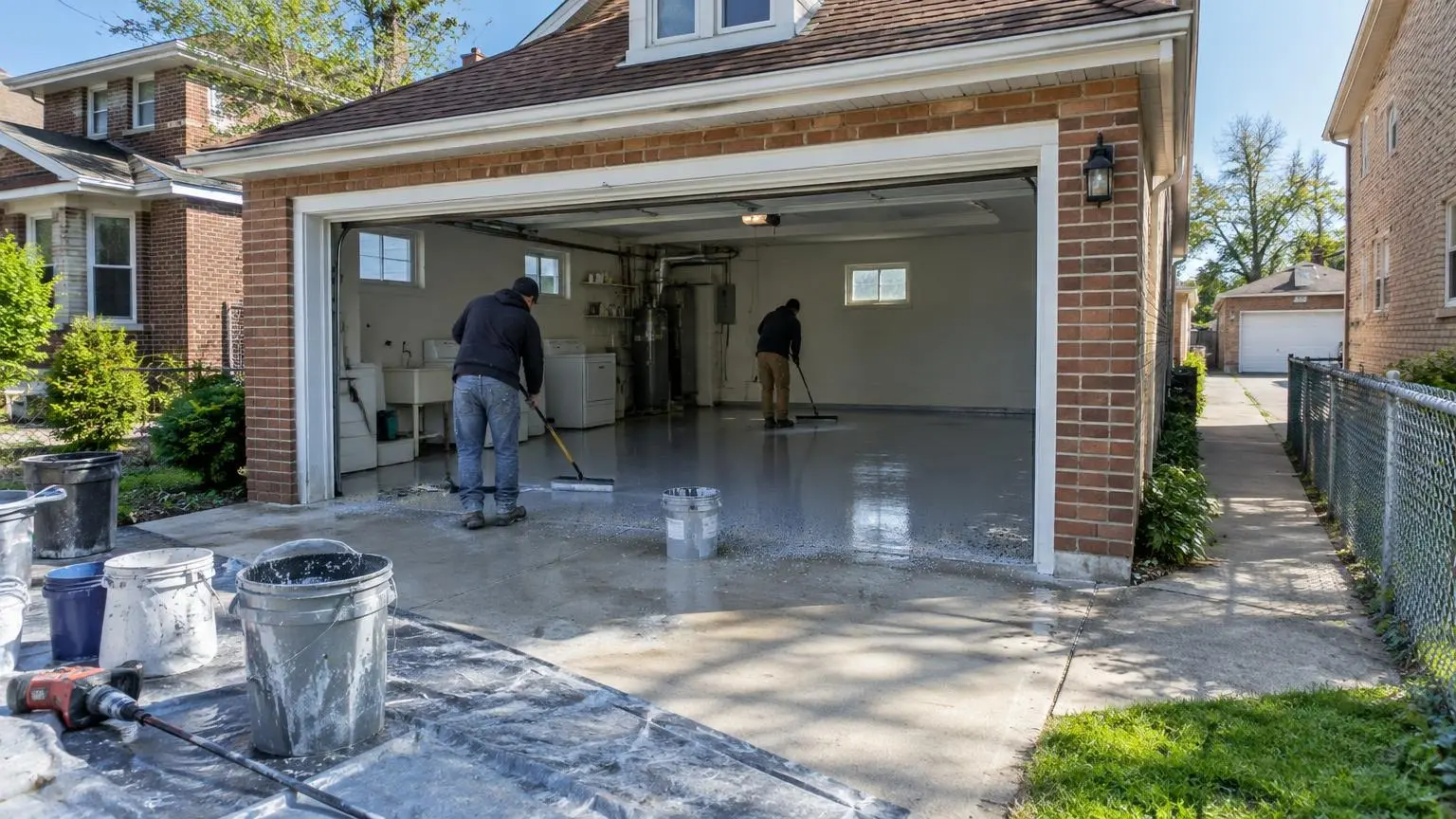
Basements, bars, studios and storefronts
Metallic Epoxy Floors in Chicago, IL
Metallic pigments poured and worked by hand for a floor that looks like polished stone or liquid metal.
- Free estimate at your property, including a moisture reading on the slab
- A written quote that lists every coat and prep step
- Surface prep explained before we grind a single square foot
A Decorative Floor Built on Plain Concrete
Metallic epoxy floors in Chicago turn plain concrete into something that looks like marble, poured metal or deep water. A metallic epoxy floor is made from clear epoxy blended with metallic pigments. As we spread and work it, the pigment moves and settles, creating swirls, veins and shifts in color that catch the light. Every floor turns out different, and that is part of the appeal.
Where metallic floors make sense
Finished basements are the most common place we see them. A metallic floor can make a basement rec room, home bar or theater feel like a finished space, not a converted one. They also suit shops, salons, studios, storefronts and office lobbies where looks matter and traffic is moderate. In a garage that sees salt and tires every day, a chip floor is generally the more sensible pick. We will tell you honestly if a metallic floor fits the room.
The slab has to be right first
A metallic floor shows everything underneath it. Cracks, patches and low spots that a chip floor would hide can telegraph through a metallic finish. So prep is even more careful: diamond grinding, crack filling, patching and, when the floor is out of level, a skim or self-leveling layer. On older basement slabs, which are common in a city where Census figures show about 38.8% of homes were built in 1939 or earlier, that prep is often the biggest part of the job.
Moisture testing matters even more indoors
Basements are where moisture pushes up through concrete. A metallic floor is a sealed, glossy system, and moisture trapped under it can cause bubbles or lifting. We test the slab during the estimate. If readings are high, we lay a damp-tolerant primer under the metallic coat, or we tell you that a different floor would hold up better.
Picking colors and a pattern
Metallics come in silvers, pewters, bronzes, coppers, golds, blues, greens and blacks, and we can layer two or three colors. Some people want soft, cloudy movement. Others want sharp veins like marble or a lava-like flow. We bring samples and show photos of the effects so you can choose a direction, knowing the final floor will have its own variation.
Topcoats for daily life
Metallic epoxy on its own is glossy and can scratch. We seal it with a clear topcoat chosen for the room: a urethane or polyaspartic for scratch resistance and UV stability, with a satin option if you want less shine. Where the floor gets wet, a fine grit can go into the topcoat for traction.
Caring for a metallic floor
Dust mop frequently, because grit does the scratching on a glossy surface. Use felt pads under furniture and a pH-neutral cleaner for spills. The topcoat can be lightly sanded and recoated later to refresh the shine, which is easier than redoing the whole floor.
How the effects are made
The look of a metallic floor comes from how the epoxy is placed and moved while it is still wet. We pour ribbons of color, then spread and work them with rollers, trowels and sometimes solvent sprays or air to push the pigment around. Thicker areas pool and deepen; thinner areas pick up light. The direction we work sets the pattern, which is why we go over the look you are after before we start. Once the pour begins, it moves fast, and changes have to be made while the material is still workable.
Metallic floors in commercial spaces
Shops, salons, small offices, breweries and event spaces use metallic floors to make a strong first impression on concrete they already have. For these floors we pay extra attention to the topcoat, because foot traffic, chairs and rolling carts are harder on a glossy surface than a home basement. A satin urethane or polyaspartic topcoat hides wear better, and we can add grit at entries. Downtime is planned in writing, and we can coat in sections when the space has to stay partly open.
Lighting changes everything
Metallic floors look different under warm bulbs, cool LEDs and daylight. Basement rooms with low ceilings and few windows often look brighter with lighter metallic tones that bounce light around. If you are finishing a basement, it helps to know your lighting plan before you pick colors.
Timing a metallic install
Metallic epoxy needs steady, moderate temperatures and low dust to flow and level well. Basements are a good setting because they stay fairly stable through the year, although humid summer air can condense on cool concrete. Slab temperature and dew point get measured on the day of the pour. Plan to keep the room closed off while the floor cures, with pets and foot traffic out, so nothing lands in the wet finish. We give you the full timeline when we quote.
Metallic Floor Options
Every metallic job includes prep, a primer, the metallic coat and a clear topcoat.
Marble effect
Veins and soft swirls that resemble polished stone.
Multi-color layering
Two or three metallic colors worked together for depth.
Satin or gloss topcoat
Urethane or polyaspartic clear coats in the sheen you prefer.
Self-leveling base
A leveling layer for uneven basement slabs before the metallic coat.
Moisture-tolerant primer
Used when a basement slab tests damp.
Anti-slip additive
Fine grit in the topcoat for bars, entries and wet areas.
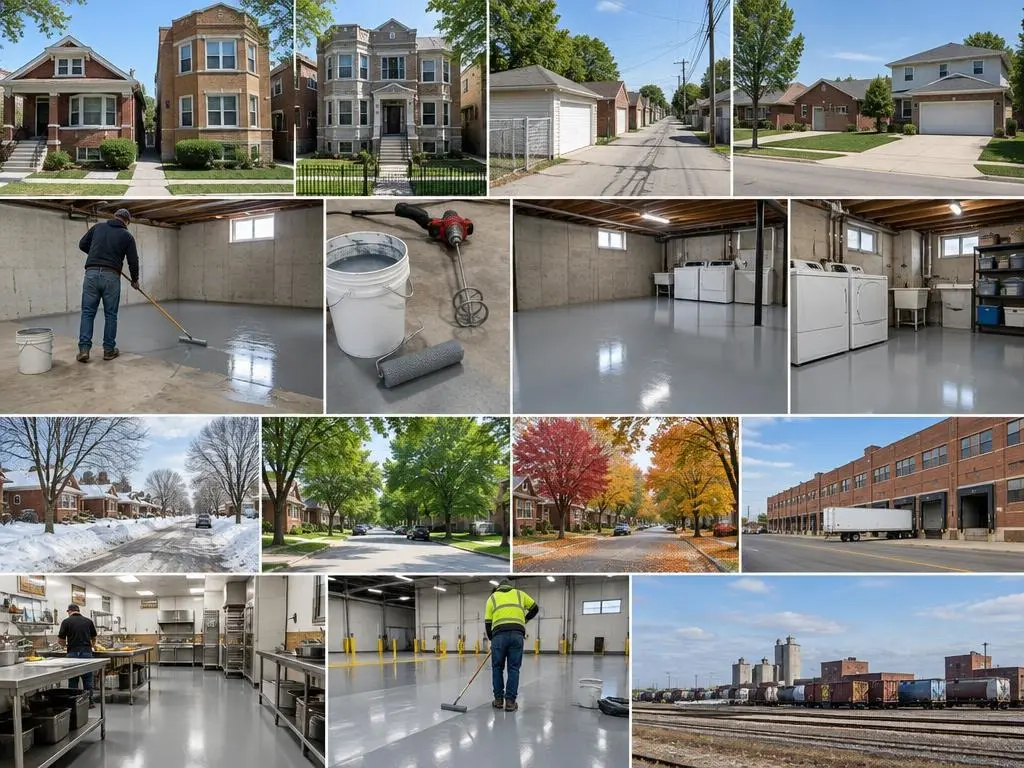
Metallic Floor Price Ranges
| What is priced | National range | Source |
|---|---|---|
| Metallic epoxy floor, per square foot | $5 to $12 | This Old House |
| Professional epoxy, per square foot | $3 to $12 | This Old House |
| High-grade coating upgrade | Adds 20% to 30% | This Old House |
| Patching damaged areas | $25 to $250 | This Old House |
| Small room, 100 to 200 sq ft | $400 to $2,000 | HomeGuide |
These are published national figures. Metallic floors vary more than most because the color count, leveling work and topcoat all change the labor. Your written estimate, made after we see the room, is the price.
How a Metallic Floor Is Poured
1. Plan the look
We review samples, test moisture and check how level the slab is.
2. Grind, patch and level
The slab is ground, repaired and leveled where needed.
3. Prime
A primer or base color goes down to seal the concrete.
4. Pour and work
We pour the metallic epoxy and work it by hand to build movement.
5. Topcoat
A clear topcoat in your chosen sheen protects the finish.
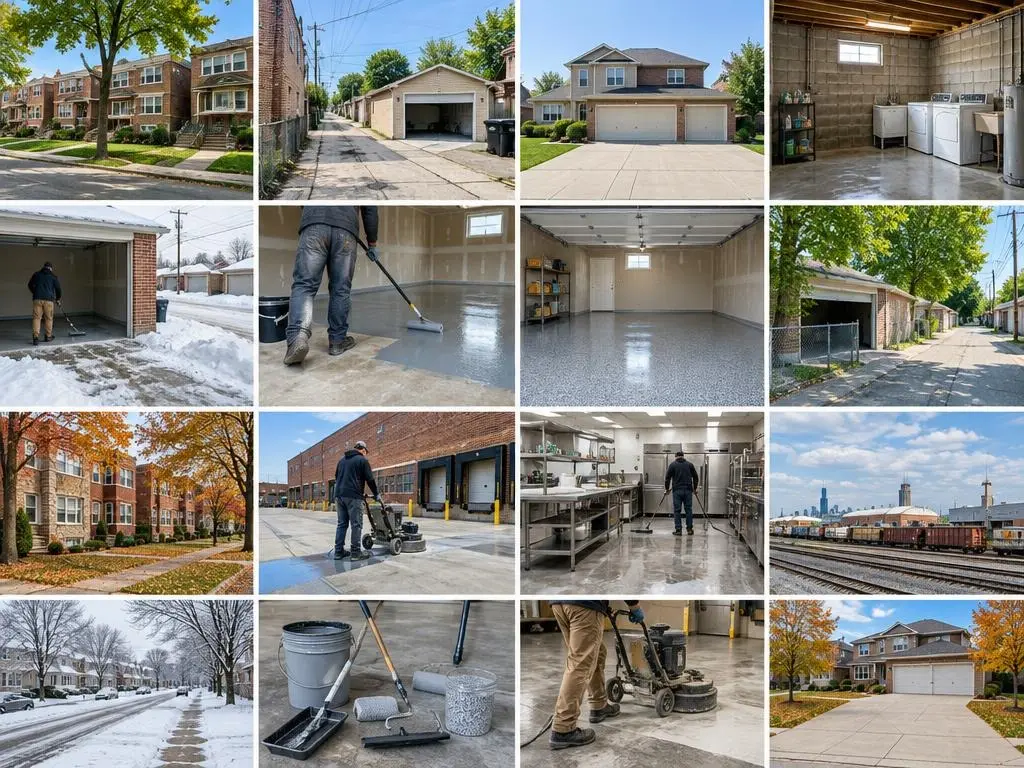
Why Choose Us for Metallic Epoxy Floors
Straight talk on fit
We tell you when a chip floor would serve the room better.
Leveling handled first
Uneven slabs get a leveling layer so flaws do not show through.
Samples before you commit
Color and effect samples at the estimate.
Metallic Epoxy Floors Questions
Are metallic epoxy floors good for basements?
Yes, provided the slab clears a moisture test. They are popular in basement rec rooms and bars. Testing comes first, and when the readings call for it we lay down a primer built to tolerate moisture.
Can I put a metallic floor in my garage?
You can, but road salt, hot tires and grit are hard on a glossy finish. For most Chicago garages, a chip floor is more practical.
Will a metallic epoxy floor scratch?
The clear topcoat can scratch from grit and dragged furniture. Dust mop often and use felt pads. The topcoat can be refreshed later.
What does a metallic floor run per square foot?
This Old House puts metallic systems at $5 to $12 per square foot. Leveling, the number of colors and the topcoat change the total, and we give you a written price.
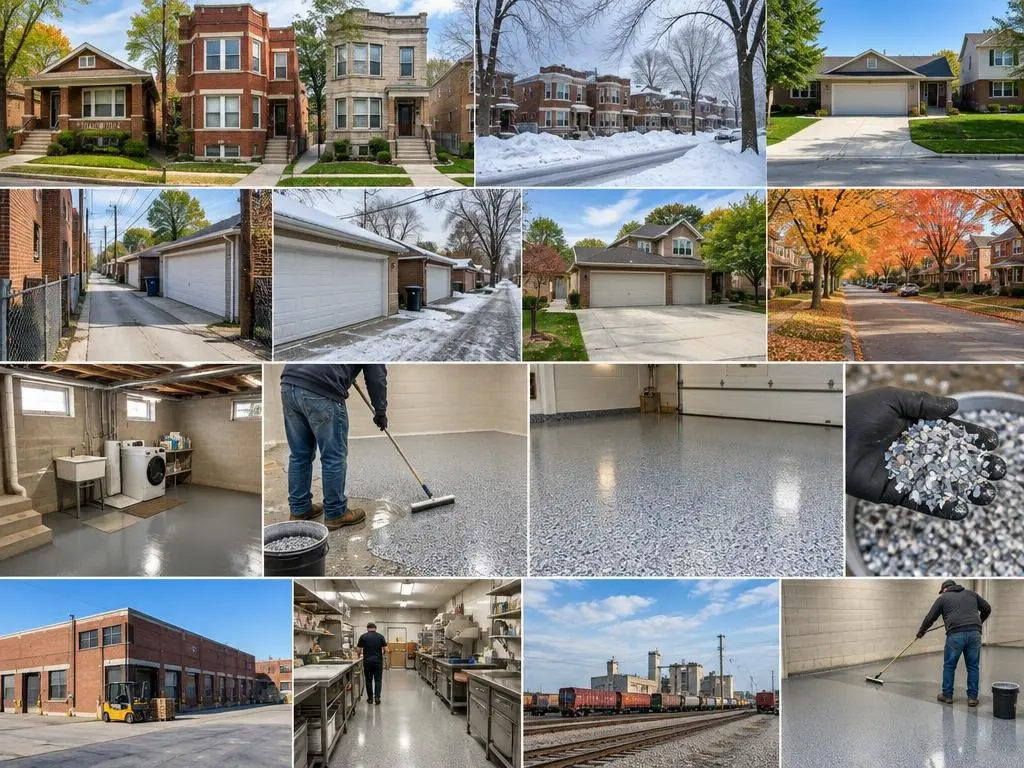
Metallic Epoxy Floors Service Areas
- Epoxy Flooring in Chicago, IL
- Epoxy Flooring in Evanston, IL
- Epoxy Flooring in Skokie, IL
- Epoxy Flooring in Oak Park, IL
- Epoxy Flooring in Berwyn, IL
- Epoxy Flooring in Cicero, IL
- Epoxy Flooring in Oak Lawn, IL
- Epoxy Flooring in Orland Park, IL
- Epoxy Flooring in Tinley Park, IL
- Epoxy Flooring in Naperville, IL
- Epoxy Flooring in Downers Grove, IL
- Epoxy Flooring in Elmhurst, IL
- Epoxy Flooring in Hinsdale, IL
- Epoxy Flooring in La Grange, IL
- Epoxy Flooring in Western Springs, IL
- Epoxy Flooring in Lombard, IL
- Epoxy Flooring in Wheaton, IL
- Epoxy Flooring in Bolingbrook, IL
- Epoxy Flooring in Joliet, IL
- Epoxy Flooring in Palos Heights, IL
- Epoxy Flooring in Evergreen Park, IL
- Epoxy Flooring in Wilmette, IL
- Epoxy Flooring in Winnetka, IL
- Epoxy Flooring in Lincolnwood, IL
Get a Metallic Epoxy Floors Estimate
Free estimates and color samples for metallic epoxy floors in Chicago and nearby suburbs.